


Is India Safe for Luxury Travellers? A Private-Tour View
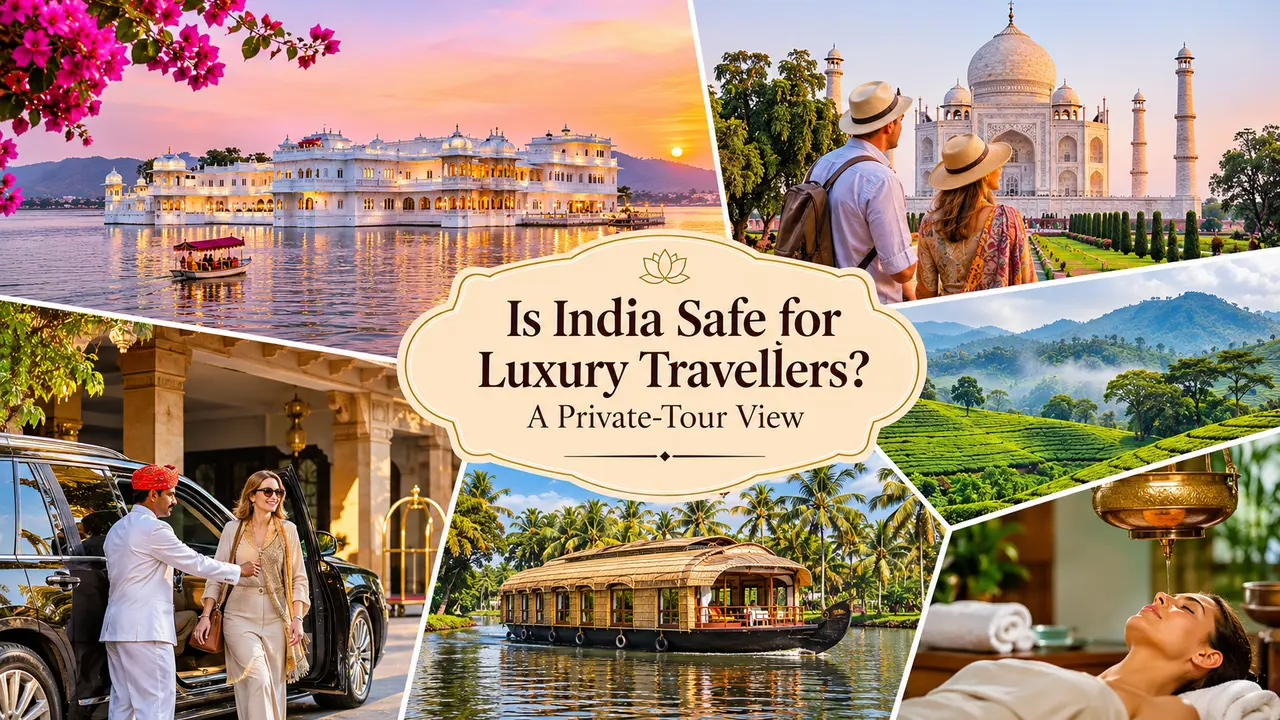
India is a destination of extraordinary contrasts. From the royal palaces of Rajasthan and the timeless beauty of the Taj Mahal to Kerala's peaceful backwaters and the Himalayan landscapes, the country offers experiences that can make a holiday truly unforgettable.
Yet, for many international visitors, particularly those planning their first journey to India, an important question comes before choosing hotels or destinations:
Is India safe for luxury travellers?
The honest answer is that India can be explored comfortably with thoughtful preparation, suitable accommodation, reliable transportation and informed local assistance. However, no destination is completely risk-free, and travelling in luxury does not automatically remove every safety concern.
India is also an enormous and diverse country. Conditions vary between states, cities, neighbourhoods and even individual travel routes. Understanding these differences is essential when planning a comfortable holiday.
In this guide, we look at the practical considerations that matter to luxury travellers, explain how private tours can help with travel arrangements and share ways to prepare for a more confident journey through India.
"A memorable journey begins with beautiful destinations, but peace of mind comes from knowing that the details have been thoughtfully planned."
What Do Official Travel Advisories Say About Visiting India?
Before travelling, it is important to understand the advice issued by your own government.
Travel advisories assess risks such as crime, terrorism, civil unrest, road safety, health concerns and regional security conditions. Their recommendations can change, so travellers should check the latest information before departure and during their stay.
As of 28 November 2026, the published guidance includes:
United States Department of State: India is listed at Level 2 – Exercise Increased Caution, with concerns including crime and terrorism.
UK Foreign, Commonwealth & Development Office (FCDO): The UK advises against travel to certain areas, including specified areas close to the India–Pakistan border.
Australian Government – Smartraveller: Advises travellers to exercise a high degree of caution overall, with higher restrictions for certain regions.
Government of Canada: Advises travellers to exercise a high degree of caution, with additional regional warnings.
These advisories do not mean that every destination in India carries the same level of risk. They highlight the importance of understanding the specific locations on your itinerary.
Before booking, consult the official sources:
For luxury travellers, checking these sources is especially important when planning multi-state itineraries, remote excursions or journeys close to international borders.
Does Booking a Private Luxury Tour Make India Safer?
A private tour cannot guarantee personal safety, but it can make many aspects of travelling through India more organised and manageable.
Instead of arranging every transfer independently, travellers can have a planned route, dedicated vehicle, pre-selected accommodation and local assistance.
A well-organised private tour may offer several practical advantages.
1. Dedicated Chauffeur-Driven Transportation
One of the most important considerations when travelling in India is road transportation.
Traffic conditions can be busy, driving styles may differ from those in the USA or UK, and journeys between destinations can take longer than expected.
A private chauffeur-driven vehicle allows travellers to avoid the uncertainty of finding transport at every destination.
When arranging your vehicle, confirm:
The type and condition of the vehicle.
Whether seat belts are available for every passenger.
The driver's experience and contact details.
Planned driving hours and rest stops.
Airport pickup and drop-off arrangements.
Whether the vehicle remains available during sightseeing.
Avoid unnecessary late-night road journeys, particularly on unfamiliar routes. For longer transfers, consider daytime departures and suitable breaks.
2. Carefully Selected Hotels
Accommodation is another important part of a comfortable holiday.
Luxury hotels often provide established reception services, security arrangements, concierge assistance and organised transport. However, the quality of these services varies between properties.
Before booking, consider the hotel's location, recent guest feedback, security arrangements, emergency assistance and accessibility to the places you plan to visit.
For example, a heritage palace in Rajasthan, a luxury hotel in Delhi and a secluded resort in Kerala may offer very different surroundings and facilities.
A well-chosen hotel should complement your itinerary while making arrivals, departures and daily sightseeing convenient.
3. Experienced Local Guides
A knowledgeable local guide can make a significant difference to the travel experience.
Beyond explaining the history of monuments and cultural traditions, guides can help visitors understand local customs, navigate busy attractions and avoid common tourist-area inconveniences.
They can also help with practical matters such as ticket arrangements, suitable visiting hours and communication with local service providers.
Luxury travel should not mean remaining isolated from local culture. The right guide can help you experience India more confidently while appreciating its diversity.
4. Planned Itineraries and Local Assistance
An organised itinerary provides clarity about where you are travelling, which hotels you are using and how you will reach each destination.
Travellers should receive clear contact details, hotel information, transfer arrangements and an emergency communication plan before the journey begins.
At Luxury India Private Tours, our approach focuses on personalised itineraries, private transportation, selected accommodation and local guidance.
Explore our Luxury India Tour to understand how a private journey can be planned around your preferred destinations, travel pace and accommodation category.
Which Destinations Are Suitable for a Luxury India Holiday?
India has many established tourism destinations, but the right route depends on current conditions, the season and your travel preferences.
Here are some popular regions that international travellers often consider.
Rajasthan – Royal Heritage and Palace Stays
Rajasthan is known for its historic forts, palace hotels, desert landscapes and cultural experiences.
Jaipur, Udaipur and Jodhpur offer opportunities to explore heritage architecture, traditional markets and royal history.
A private journey through Rajasthan can combine palace accommodation, guided sightseeing and comfortable transfers between cities.
Travellers should still check local conditions, festival crowds and road arrangements before visiting specific areas.
Delhi, Agra and Jaipur – The Golden Triangle
The Golden Triangle is one of India's best-known travel circuits, connecting Delhi, Agra and Jaipur.
It is particularly suitable for first-time visitors who want to explore major historic attractions within a relatively compact itinerary.
A private guide and planned transportation can help make sightseeing more organised, especially around popular attractions and busy urban areas.
Kerala – Backwaters, Hills and Wellness
Kerala offers a different atmosphere, with tropical landscapes, tea plantations, beaches and peaceful backwaters.
Travellers can combine Kochi, Munnar, Thekkady and Alleppey with carefully selected hotels and private transfers.
For a relaxed holiday, allow enough time between destinations and check weather conditions, particularly during the monsoon season.
Other Regions Require More Specific Planning
India also includes Himalayan destinations, wildlife reserves, remote rural areas and regions with changing security conditions.
Some locations may have additional entry requirements, weather-related risks or government travel restrictions.
Do not assume that a destination is suitable simply because it appears in a travel brochure. Check the latest government advice for each region before including it in your itinerary.
Is Public Transportation Safe for Luxury Travellers?
India has an extensive public transportation network, including trains, buses, metro systems, taxis and auto-rickshaws.
Many visitors use these services successfully, but crowded transport hubs and busy public areas can present challenges.
Petty theft, misleading offers and transport scams are among the issues mentioned in official travel guidance.
For travellers who prefer a more controlled journey, private transfers can reduce the need to arrange unfamiliar transport repeatedly.
If you do use public transportation:
Use official booking channels.
Keep valuables secure and out of sight.
Check vehicle and driver details before starting a journey.
Avoid unregistered transport arrangements.
Share your journey details with someone you trust.
Be particularly careful when travelling late at night.
For airport arrivals, pre-arranged hotel or tour-operator transfers can make the first journey from the airport more straightforward.
Is India Safe for Female Luxury Travellers?
Women travel to India for holidays, cultural experiences, business and independent exploration. However, harassment and sexual assault are genuine concerns identified by several foreign government advisories.
Women travelling alone should pay particular attention to accommodation, transport, evening plans and the areas they visit.
Practical precautions include:
Use verified transportation rather than accepting unsolicited rides.
Avoid isolated areas and unfamiliar streets late at night.
Share your itinerary and transport details with a trusted contact.
Choose accommodation with appropriate security and reception services.
Dress according to the setting, particularly when visiting religious sites.
Be cautious when accepting food or drinks from strangers.
Speak to hotel staff or local authorities if you feel uncomfortable or threatened.
Women travelling with family, friends or through private arrangements may find it easier to coordinate transportation and daily plans, but no travel arrangement should be treated as a guarantee of safety.
The most important consideration is having the freedom to make informed choices and access reliable assistance when needed.
Food, Drinking Water and Health Considerations
Indian cuisine is one of the highlights of visiting the country, with regional dishes, spices and cooking traditions offering a remarkable variety of flavours.
However, travellers should take sensible precautions with food and drinking water.
Choose established restaurants and hotels: Select places with good hygiene practices and a reputation for food quality.
Drink safe water: Use sealed bottled water or properly treated water. Check that bottle seals are intact.
Be careful with raw foods: Wash or peel fruit yourself where possible, and be cautious with raw salads if water quality is uncertain.
Eat freshly prepared food: Prefer food that is freshly cooked and served hot.
Carry essential medication: Bring any regular prescriptions and a basic travel health kit.
Consult a travel health professional: Discuss vaccinations, medication and health precautions before departure.
For a luxury holiday, it is sensible to communicate dietary restrictions and food preferences to hotels and tour planners before arrival.
How Can Travellers Avoid Common Tourist Scams?
Tourist scams can occur in popular destinations worldwide, and India is no exception.
Visitors may encounter misleading sightseeing offers, unofficial guides, inflated prices, fake booking websites or people claiming to represent hotels and government services.
A few simple practices can reduce the risk:
Book hotels and tours through established providers.
Confirm the final itinerary and inclusions in writing.
Check official websites before making payments.
Avoid sharing passport or payment information through unverified links.
Ask for receipts for significant transactions.
Confirm guide and driver identities before starting a service.
Use official government websites for visa applications.
The Indian government's official e-Visa website is indianvisaonline.gov.in. Its guidance warns applicants about unauthorised websites claiming to provide e-Visa services.
Always check eligibility, application requirements and processing information for your nationality before applying.
What Should You Do Before Travelling to India?
A little preparation can make the arrival and the rest of the journey considerably more straightforward.
Use this checklist before departure:
Check your government's latest India travel advisory.
Confirm visa requirements through the official Indian e-Visa portal or relevant Indian mission.
Purchase suitable travel insurance.
Share your itinerary and emergency contacts with family or friends.
Confirm hotel bookings and airport transfers.
Keep digital and physical copies of important travel documents.
Save local emergency numbers and your embassy or consulate details.
Check weather conditions and any regional travel restrictions.
Discuss medical and dietary requirements with your travel planner.
Travel insurance should cover your actual itinerary, planned activities and relevant medical or evacuation costs. Check exclusions and conditions carefully.
Frequently Asked Questions About Safety in India
1. Is India safe for luxury tourists visiting for the first time?
India can be explored by first-time luxury visitors with careful preparation, appropriate accommodation and reliable transportation. However, travellers should understand local conditions, follow government advice and take normal precautions.
2. Is it better to book a private tour in India?
A private tour can make transportation, accommodation and sightseeing easier to coordinate. It offers flexibility and local assistance, but it does not eliminate every travel risk.
3. Is it safe to travel between Indian cities by road?
Many travellers use road transfers successfully. Choose a reliable vehicle and experienced driver, plan reasonable driving hours and avoid unnecessary journeys at night.
4. Is India safe for women travelling alone?
Women do travel independently in India, but official advisories highlight risks of harassment and sexual assault. Solo female travellers should plan transport and accommodation carefully, avoid isolated areas and stay aware of their surroundings.
5. Are luxury hotels in India safe?
Many established luxury hotels have security and guest-support arrangements. However, standards vary, so research each property and confirm its facilities before booking.
6. Which is the safest way to travel from the airport to a hotel?
A pre-arranged transfer through your hotel or a reputable travel operator is a practical option. Confirm the driver's name, vehicle details and pickup instructions before arrival.
7. What emergency number should international visitors know in India?
India's national emergency response number is 112. Travellers should also save the contact details of their country's embassy or consulate.
8. Should I check travel advisories after booking my holiday?
Yes. Government advice can change. Check it before departure and monitor updates throughout your trip, especially when travelling across several states.
Discover India with Greater Confidence
India rewards travellers who approach it with curiosity, preparation and an understanding of its diversity.
A thoughtfully planned journey can bring together the royal heritage of Rajasthan, the extraordinary monuments of Agra, the cultural energy of Delhi and the peaceful landscapes of Kerala. Private transportation, carefully selected hotels and knowledgeable local guides can make the practical side of the journey easier to manage.
But responsible travel planning always begins with honest information. Check official government advice, understand the conditions at your destinations, arrange appropriate insurance and make decisions that suit your personal circumstances.
At Luxury India Private Tours, we believe a memorable holiday should combine extraordinary experiences with careful planning and reliable local support.
Explore our Luxury India Tour and begin designing a private journey around your interests, preferred accommodation and travel style.
Discover India with an open mind, thoughtful preparation and the confidence that comes from making informed travel choices.